
Struggling to choose between Split and Dubrovnik? You’re not alone. It’s one of the most common dilemmas when planning a trip to Croatia. Both cities offer stunning Adriatic scenery and deep history, but they serve very different roles in an itinerary.
The short answer is that Split is better for island hopping, beaches, nightlife, and offers a more affordable, lived-in feel. Dubrovnik offers a cinematic old town, a polished atmosphere, and higher prices.
I’ve visited Split more than four times, visited Dubrovnik twice, and spent time living in nearby Kotor.
Below, I’ll break down the differences based on activities, budget, and overall experience so you can build an itinerary that fits your travel style. I’ll also reference Kotor occasionally, since many Adriatic itineraries combine it with Dubrovnik.
Split vs Dubrovnik: Quick Verdict
- Best for Short Stays (1–2 Days): Dubrovnik. It is compact and visually breathtaking, though in peak summer it can occasionally feel a little over-polished.
- Best for Long Stays (3+ Days): Split. Is a more of a real, living city with a bustling vibe. It offers more variety, lower prices, and acts as a central hub for day trips.
My advice, is simple: choose Dubrovnik for romance and aesthetics. Choose Split for culture and exploration.
Which Option Fits Your Travel Style?
Use these four scenarios to see which plan makes the most sense for your trip.
1. First-Time Visitors (7 to 10 days from the US or Canada)
If this is your first time on the Adriatic with limited vacation days, keep things simple so you get the most out of your trip.
What to do: Base yourself in Split for most of your stay, then add one to two nights in Dubrovnik at the end before flying home.
Split makes daily logistics easier and more affordable, with straightforward ferries and better mid range accommodation. Dubrovnik is spectacular, and best enjoyed in shorter doses, especially as a finale.
Good to know: Only add Kotor if you have a full 10 days and are happy to handle a border crossing.
2. History Lovers and Game of Thrones Fans
If you are drawn to old stone streets, fortifications, and filming locations, the southern coast will suit you better.
What to do: Start in Dubrovnik and give it most of your time, ideally three full days.
You will want time to explore the Old Town, walk the walls, visit Lokrum Island, and see key Game of Thrones locations.
Next: Kotor and Perast are just 2 hours away and make great companions to Dubrovnik, offering even more medieval and Venetian scenery without needing to travel north to Split.
3. Island Hopping and Nightlife Trips
If you are picturing warm swim stops, ferry decks, and lively evenings, Dubrovnik will feel too limited.
What to do: Base yourself in Split. Stay near the Old Town or around Bačvice if you want to be close to the beach. If you are unsure which area to pick, see my guide on where to stay in Split for a detailed neighbourhood breakdown.
Split is the main ferry hub, making trips to Hvar, Brač, Vis, and Šolta easy for both day visits and overnights. At night, you have plenty of bars and clubs within walking distance.
Worth a look: Dubrovnik is still great for a short visit, but it cannot match Split for beaches, connections, or energy.
4. Slower Travel and Scenic Trips
If you prefer quieter mornings, dramatic landscapes, and a softer pace, consider shifting your base altogether.
What to do: Stay in Kotor or around the Bay of Kotor and visit Dubrovnik as a long day or 2-day trip. If you are considering this route, see my full Kotor travel guide for where to stay, what to do, and how long you need.
Kotor offers a dramatic, fjord like setting, the fortress hike, and easy access to Perast and Mount Lovćen, all without the heavy crowds of Dubrovnik.
The main trade off is you will have to save Split for a future trip focused on islands and the northern Dalmatian coast.
Cost: Is Split cheaper than Dubrovnik
Verdict: Split is the more budget-friendly hub; Dubrovnik is the premium splurge.
Split reliably comes out cheaper for accommodation and dining, and especially drinks. As I noticed during my last visit to the two cities.
In Split, you can get a basic meal out for around €15 and street food for around €10, but In Dubrovnik, that rises to around €20, and there are fewer street food options. While beer was only a euro or two more in Dubrovnik, cocktails, and even an Aperol Spritz was sometimes pushing €16, compared to less than €10 in Split.
When it comes to accommodation in Split, your money gets you a larger or better-located apartment in and provides access to local konobas (taverns) that haven’t fully adopted “tourist pricing.” I break down the best-value neighbourhoods in my where to stay in Split guide.
Dubrovnik’s Old Town carries a huge premium, more recently dubbed the “Game of Thrones tax,” especially in the summer. As such, unless you’re paying more, you’ll find yourself further away from the old town and its attractions that you would in Split.
Treating Split as your main base and saving Dubrovnik for a shorter “splurge” is the most effective way to keep costs under control without feeling like you’re penny-pinching.
If you add Kotor to the mix, you’ll find it generally sits closer to Split’s price point, making the Bay of Kotor an excellent option for a slower, high-value base.
Old Towns & History

Firstly, I should point out that I’m not a history buff, and you don’t need to be to appreciate the magnitude of these places.
All three are stunning, featuring that iconic Adriatic look of charming stone buildings, red-tiled roofs, and worn marble cobblestones. But they feel profoundly different due to their primary history:
- Split: Built around the 4th-Century Ancient Roman Diocletian’s Palace.
- Dubrovnik: A Medieval/Renaissance Maritime Republic fortress city.
- Kotor: A smaller, quieter Venetian Fortress City against a fjord.
Split’s Diocletian’s Palace
Split offers a more immersive connection to history that Dubrovnik cannot quite match.

The historic core is Diocletian’s Palace, a vast retirement complex built for a Roman emperor. Its ancient walls, the Peristyle courtyard, and the basement halls are not preserved as a separate museum. They form the literal foundation of the modern city.
The main sights can be covered in half a day, but you will want a full day to properly explore the maze of alleys, climb the St Domnius bell tower, and absorb the atmosphere.
The feel: The palace is constantly alive. Locals still use the Roman walls as the framework for apartments, shops, and cafés. History here feels woven into daily life rather than presented behind barriers. Evenings on the Peristyle, often with live music, are especially atmospheric.
For Game of Thrones fans: Meereen
Split offers a darker, more contained experience for fans of Daenerys Targaryen.
The atmospheric basement halls doubled as Daenerys’ throne room in Meereen and the place where she kept her dragons. Just outside the city, the dramatic Klis Fortress provided the sweeping exterior shots of Meereen.
The filming presence is less dense than in Dubrovnik, but the locations here feel larger in scale and more immersive.
Dubrovnik Old Town
Dubrovnik’s Old Town is one of the most visually complete historic cities in Europe. Unlike Split, where Roman ruins blend into everyday life, Dubrovnik presents a remarkably intact medieval fortress city. The limestone streets, uniform baroque buildings, and imposing defensive walls create a setting that often feels almost too perfect.
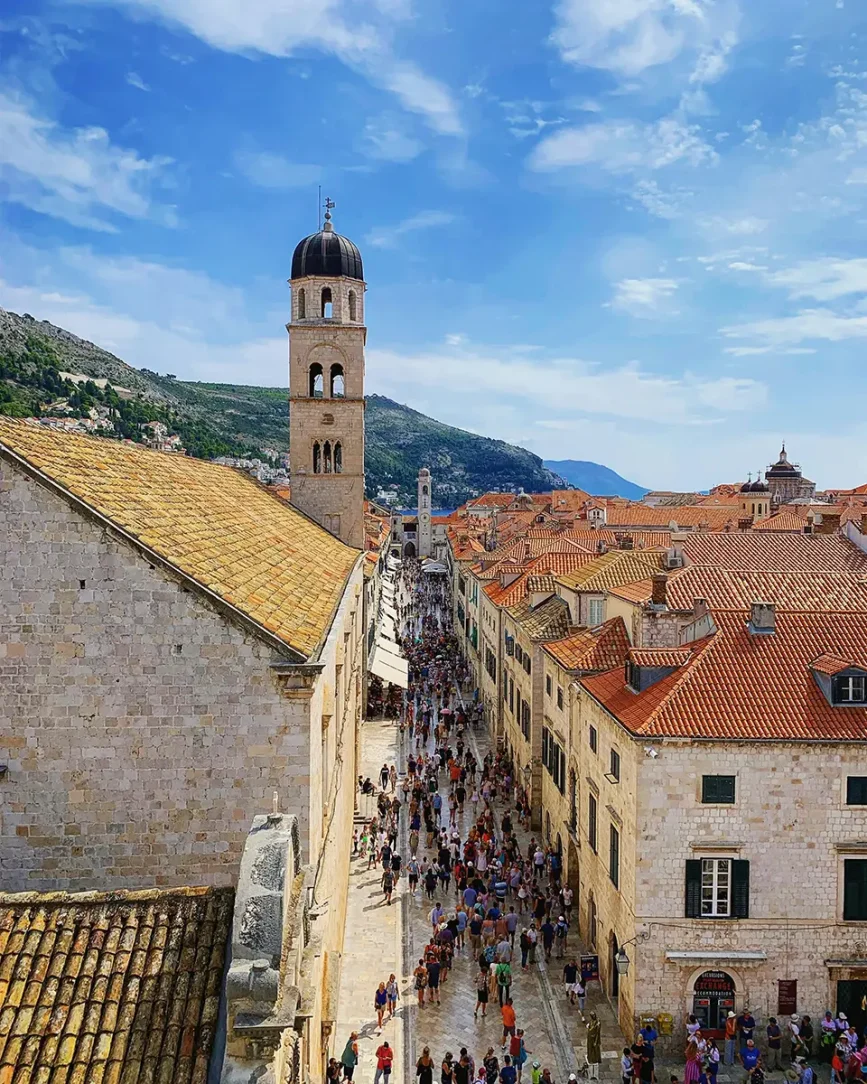
The headline experience is the city walls walk. Taking about 1.5 to 2 hours, the full circuit delivers the classic Adriatic postcard views of terracotta rooftops against deep blue sea. It is expensive, but genuinely memorable, and easily Dubrovnik’s standout historic activity.
The feel: Dubrovnik is more polished and theatrical than Split. In peak summer it can lean towards open air museum territory, but visit early in the morning or later in the evening and the atmosphere becomes far more atmospheric.
For Game of Thrones fans: King’s Landing
For fans of Game of Thrones, Dubrovnik is the clear winner. Large parts of the Old Town doubled as King’s Landing, including the Jesuit Steps (Walk of Shame) and Fort Lovrijenac (the Red Keep). The density of filming locations here is far higher than in Split.
Time needed: One full day covers the highlights, but two days allows a more relaxed pace.
Kotor Old Town
Kotor’s historic core is smaller and quieter, defined as much by its setting as by its architecture.

The standout experience is not inside the walls but above them. The fortification system climbs steeply up the mountainside to St John Fortress, and the hike itself is the main historic attraction, offering spectacular views over the red roofed town and the bay.
Because of its size, you need about 1.5 days in Kotor. One day covers the squares and churches, and at least half a day is needed for the fortress hike.
The town is especially magical after sunset, when the illuminated fortress walls trace the mountainside and create a dramatic backdrop that feels more intimate and romantic than either Croatian city.
In terms of sheer scenery, Kotor was my personal favourite. Not because of the city walls or marble squares, but because of the striking contrast between the town and the towering mountains surrounding the bay.
Food and restaurants
Choose Split for an authentic, affordable food adventure focusing on traditional local taverns and bustling markets. Choose Dubrovnik if budget is less of a concern and you prioritize an upscale, view-focused fine dining experience.
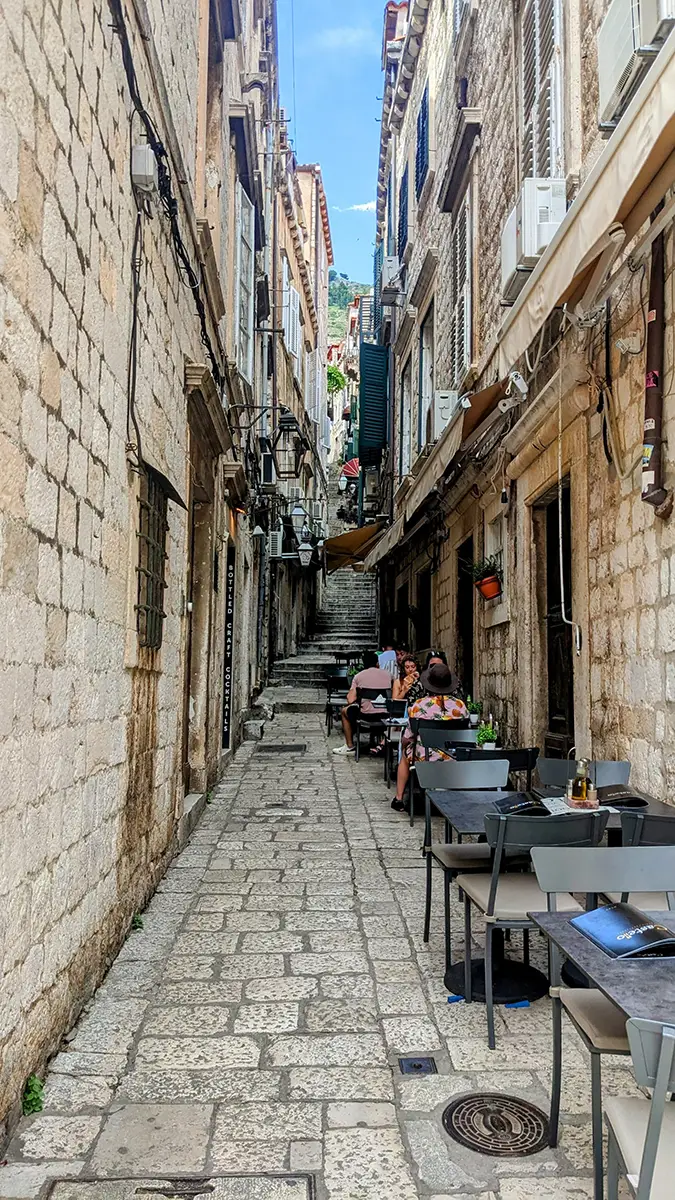
Eating out in Split
Split’s size and permanent population mean that even in the heart of the tourist areas, there are thriving taverns and simple eateries.
The Markets: The Pazar (Green Market) and the Fish Market are vibrant, working food hubs. This constant supply ensures restaurants are working with the freshest ingredients, and you can buy produce and cheese directly from local farmers.
The Konoba Culture: The best dining experiences are often found in the small, stone-walled konobas tucked in the alleys of Diocletian’s Palace or outside the Old Town walls. These are focused on hearty, traditional Dalmatian dishes.
Given that Split caters to students and working professionals, prices for a high-quality, authentic meal are consistently lower than in Dubrovnik’s Old Town.
Dining in Dubrovnik
Dubrovnik’s dining scene is more focused on delivering a breathtaking atmosphere, making it a dream destination for romantic dinners and celebratory meals. There are plenty of traditional dishes, but you’ll find more high-class (and not so high-class) international cuisine.
Expect to pay a significant premium for location. Restaurants within the Old Town walls (especially on the main streets or squares) have much higher prices than comparable quality spots in Split.
Dubrovnik dominates the luxury end of the market. You will find several restaurants that boast Michelin recognition, where the experience is as much about the dramatic setting, often perched on the ramparts or overlooking the harbour, as it is about the food.
Oysters
Due to its proximity to Ston (the source of Croatia’s most famous oysters), Dubrovnik offers exceptional, fresh oysters that are a must-try local delicacy.
Things to do in Split and Dubrovnik
Split’s activities are characterized by accessibility and diversity. Because it is a larger city and a key transport hub, it is perfectly positioned to get you out and exploring the broader region. By contrast Dubrovnik’s activities are heavily concentrated inside (and just outside) the Old Town walls, making it better for those short on time.
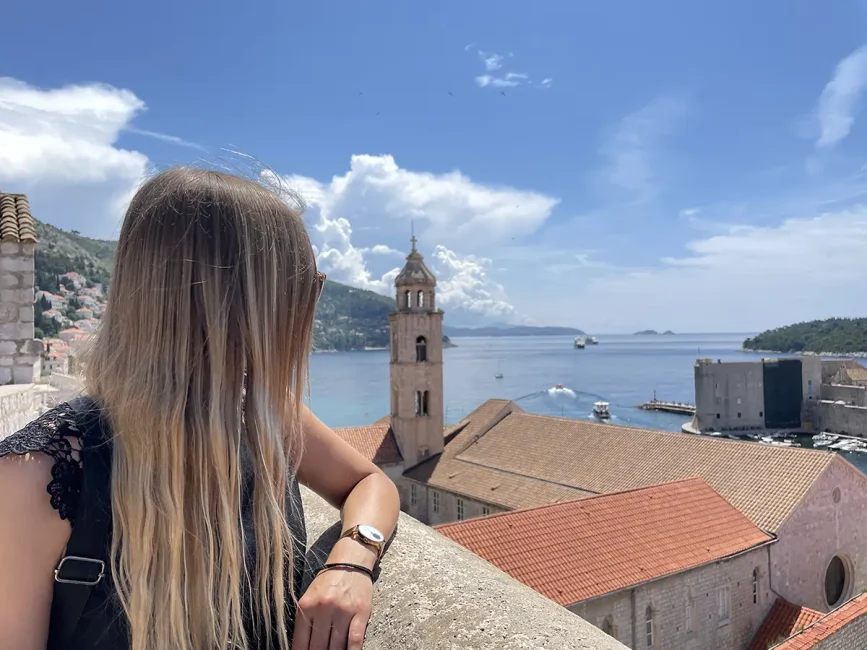
What to see in Split
Sights Within the City:
- Diocletian’s Palace: The main event. Explore the underground Basements (Substructures), the Peristyle courtyard (often featuring a Roman-garbed guard and singers), and the narrow cobblestone alleyways.
- The Riva: The vibrant, palm-lined promenade where the true local activity happens, sipping coffee or Aperol, and people-watching.
- Marjan Hill: The city’s “lungs.” A forested peninsula to the west of the Old Town. A simple walk up offers multiple viewpoints, including the famous Prva Vidilica viewpoint, and a break from the city heat. Surprisingly, I didn’t climb it until my third visit.
- Meštrović Gallery: See the masterpieces of Ivan Meštrović, Croatia’s most famous modern sculptor, housed in his former home near Marjan Hill.
- Pazar (Green Market) & Fish Market: These bustling spots outside the Palace walls offer a genuine slice of local life and are perfect for food lovers.
Day Trips:
- Island Hopping: Split has frequent and numerous ferry links to the main Dalmatian islands (Hvar, Brač, Vis). Booking a boat trip or a passenger ferry is fast and easy.
- Trogir & Klis Fortress: The UNESCO-listed medieval town of Trogir is a quick bus ride away, and the dramatic Klis Fortress (a famous Game of Thrones filming location) provides incredible views of the city.
- Krka National Park: A must-see day trip for the spectacular waterfalls, roughly 90 minutes away.
Note: While many tourists take a day trip from Split to Plitvice Lakes National Park, be warned: the drive is nearly 3 hours each way. Combined with a 3-hour walk through the park, this makes for an extremely long and exhausting day. If you want to fully enjoy Plitvice, my strong recommendation is to stay overnight in one of the guesthouses around the park or within the park itself.
What to see in Dubrovnik
- The City Walls: A true bucket-list item. The 1.5–2 hour walk is non-negotiable for the iconic views, but at €40 per person, it comes at a higher price tag than most Split attractions.
- Srđ Mountain Cable Car: The best way to get the famous, wide-angle postcard view of the entire Old Town, especially at sunset.
- Game of Thrones Pilgrimage: The city is King’s Landing. Take a tour (or self-guide) to see locations like the Jesuit Steps (Walk of Shame) and Lovrijenac Fort (The Red Keep).
- Stradun: The main, polished marble street that runs through the centre of the Old Town, lined with shops and historical architecture.
- Lokrum Island: A quick 15-minute ferry ride takes you to this nearby nature reserve, perfect for swimming and exploring the Benedictine monastery ruins.
Dubrovnik pass
If you plan on doing the City Walls (and you should, they are the highlight of the city), do not buy a standalone ticket at the gate. A standalone ticket for the City Walls costs €40. The 1-Day Dubrovnik Pass also costs €40.
By getting the pass instead of the ticket, you effectively get entry to the Rector’s Palace, the Maritime Museum, and the Franciscan Monastery for free.
The pass also includes a 24-hour bus card, which is perfect if you are staying in Lapad or Gruž and need to get to the Old Town and back without paying for taxis.
Crucial 2026 Update: Pre-Booking is Now Required: Starting in 2026, the city has introduced new regulations to manage overcrowding on the walls. You are now required to reserve a specific date and time slot in advance to walk the walls.
Once you buy your Dubrovnik Pass online, you must use the pass number to book your entry time on the official website. Do not just show up at the Pile Gate expecting to walk up immediately, or you may find yourself waiting hours for the next available slot.
Nightlife
This is probably where there’s the most dramatic difference between the two cities.
- Choose Split if you want to party late, on a budget, and have a wide variety of clubs and bars.
- Choose Dubrovnik if you prioritize a stunning sunset cocktail, an elegant atmosphere, and don’t mind paying a premium for a world-class view.
Nightlife in Dubrovnik
During my first visit to Dubrovnik “Bourbon Street” (Ulica bana Jelačića) was the place to go for its lively concentration of bars, clubs, and nightlife, during warmer months. Located between Old Town and the Gruž port area, it’s ideal for a late-night bar crawl that won’t drain your bank account. Just expect a more ‘lived-in’ vibe that’s a far cry from the manicured glamour of the Stradun.
Inside the Old Town, the scene is dominated by sophisticated wine bars and atmospheric (read high-priced) cocktail lounges, catering to a clientele willing to pay a premium for the location and view. The energy levels are generally mellow and conducive to conversation.
Just outside the old town, you might be lucky enough to find one of the Dubrovnik’s famous Buža Bars. ‘Hole-in-the-wall’ bars built directly into the cliffs outside the city walls. Sitting here with a beer or a cocktail as the sun sets over the Adriatic is the quintessential, must-do experience.
Nightlife in Split
Split has earned its reputation as the party hub of the Dalmatian coast thanks to its large university population, bustling port, and strong backpacker scene. The energy is consistently high, affordable, and late-running, but that doesn’t mean you can’t enjoy a relatively calm and quiet night out.
Just like Dubrovnik, Split also has upscale wine bars catering to those who prefer a more relaxed and mellow evening, but those who want something more lively, then Split has you covered.
Typically you’ll start within the ancient confines of Diocletian’s Palace, where lively bars are crammed into the stone-walled alleys and along the Riva promenade. These small venues serve as the perfect launchpad for a longer night.
As the evening progresses, the party shifts to bars/clubs located outside the historic center. You have large, modern options like Central the Club, but the unique Split experience is found on Bačvice Beach.
Here, you can find clubs and bars right on the popular sandy beach, ideal for dancing until the early hours. Because Split’s social scene is driven by locals and students, you’ll find more affordable drinks and a far wider selection of venues that stay open and busy even in the shoulder seasons.
Beaches: Does Dubrovnik really have better beaches than Split?
Most travel guides hand this win to Dubrovnik, but I’m going to offer a counter-opinion: Split’s beaches are actually more usable.
While Dubrovnik has picturesque coves, they are often small and difficult to access. Banje Beach, the most famous spot in Dubrovnik, offers stunning views of the Old Town and Lokrum Island, but in summer it is largely monopolized by expensive sun loungers. There is precious little space left for those of us who just want to throw a towel on the sand.
In Dubrovnik, I actually preferred Bellevue Beach for its serene vibe, though the catch is the steep descent (and the breathless climb back up).
Split, however, offers more space. Kaštelet and Kašjuni beaches have larger bathing areas and a calmer atmosphere, with natural shade provided by the pine trees growing right near the water. For the adventurous, the path from Kaštelet to Ježinac offers numerous rock-jumping spots without the crowds.
Which is better out of season?
If you are visiting in May, June, or September, both cities are incredible. In fact, these shoulder months are the best time to avoid the summer crush.
However, from October to April, there is only one winner: Split.
As beautiful as Dubrovnik is, it becomes a ghost town in winter. Restaurants shutter, ferries run less frequently, and the streets empty out. Split, on the other hand, is home to over 200,000 locals. It is a living city year-round, meaning you will always find open restaurants, lively coffee bars, and a vibrant atmosphere regardless of the month.
(Looking for a different winter break? Check out my guide to Taormina for a small but pretty alternative.)
Which city wins on accessibility?
Bad knees, baby strollers, or wheeled suitcases? Choose Split.
Dubrovnik is built like a medieval fortress and that extends to its accessibility. Both Split and Dubrovnik feature small alleyways and cobblestone streets, but Split is mostly flat, whereas Dubrovnik is a series of stairs, and inclines.
If you have a baby stroller, you’ll have a much easier time getting around in Split. That also goes for those with lots of luggage. In fact just after I left Dubrovnik, there was talk of forcing tourists to use porters (at their cost), to deliver their wheeled suitcases to their old accommodation.
Digital Nomads & Remote Work: Split or Dubrovnik?
Working remotely allows me to travel to destinations I wouldn’t ordinarily have the time to. Although I wasn’t working during my multiple visits to Split or Dubrovnik, the challenge of finding a calm peaceful spot with good wifi/internet is often at the back of my mind.
For remote workers, Split is the superior base. As a university town with a year-round population, Split has a genuine work infrastructure that Dubrovnik lacks.
You’ll find dedicated coworking spaces like The Works (near the Old Town) and TinkTank, along with a community of expats and nomads that doesn’t disappear when the cruise ships leave in October.
Dubrovnik suffers a little with its Wi-Fi. The same thick medieval walls that protected Dubrovnik from invaders are excellent at blocking 5G and Wi-Fi signals. If you rent an apartment deep in the Old Town, do not assume you will have high-speed internet unless the host specifically confirms a fibre connection.
The Café Culture
In Split, you can nurse a coffee for two hours with your laptop and nobody will bother you. In Dubrovnik, especially during peak season, table turnover is pretty aggressive. You are taking up prime real estate that could be sold to a tourist for a three-course lunch.
The Bottom Line: If you need to grind out a week of work, choose Split. It offers reliable fiber speeds, a year-round social scene, and lower long-term rental costs. Treat Dubrovnik as a weekend “digital detox” trip, not your monthly office.
Is Kotor a better ‘remote work’ alternative?
Kotor captures much of the charm of Split and Dubrovnik in a dramatic but peaceful setting. I worked here for months, and my opinion is that unless you need the hustle and bustle of a larger city like Split, Kotor and modern nearby cities like Tivat make an excellent digital or travel nomad base.
How to get there
Having visited by plane, train, motorcycle, boat and bus, I know a thing or two about getting to this part of the world. Given its size and location, Split is the most well connected, and easiest to get to from outside of Europe, but Dubrovnik still offers decent connections to European cities.
Flying In
Both cities have modern airports, but they serve different purposes.
Split (SPU): This is the main gateway for the islands. It’s a high-volume airport with excellent connections across Europe. Notably for 2026, United Airlines has launched a direct flight from Newark to Split, making it much easier to reach from the US.
Dubrovnik (DBV): Has connections during summer to European cities, but if you’re arriving from elsewhere you’ll most likely land in Zagreb and transfer. A domestic flight from Zagreb to Dubrovnik is around 45-mins.
Taking the Train
The most important thing to know about Croatian rail is that the tracks stop at Split. If you are coming from Zagreb or elsewhere in Europe by train, Split is the end of the line. There is no train station in Dubrovnik, and there are no plans to build one. To get further south, you will have to switch to a bus or a boat.
Driving and Buses
If you are driving or taking a bus between the two cities, the journey has become much easier recently thanks to the Pelješac Bridge. The first time I did it, I had to cross through a small strip of Bosnia (the Neum corridor), which meant waiting in two border lines and showing your passport just to stay within Croatia. Now, the bridge allows you to bypass that entirely.
It’s a scenic drive that takes about three to four hours. Buses run this route frequently and are a reliable, affordable way to get between the two cities.
